How to Fix a Leaking Pipe at Home

Water leaks are a homeowner’s nightmare.
Besides causing water damage, they can also negatively affect your:
- Water bills
- Boiler pressure
- Central heating Hot water supply.
You may be able to fix them yourself, depending on how severe the issue is.
Read on to learn how to fix a water leak quickly and effectively whilst you wait for professional help.
How to spot a hidden pipe leak
If a pipe bursts, the pooling water makes it immediately obvious.
But hidden leaks, like those behind walls or under floorboards, are much harder to spot.
Carry out regular checks on your plumbing system to catch weaknesses early. Inspect your:
- Taps (look out for dripping taps)
- Around your toilet pipe wall cover
- Under your sink.
Look out for:
- Wet spots on your ceilings
- Pooling water
- Funny smells coming from your pipework.
Immediate first steps
1. Turn off the water supply
You should do this in two places:
- The water valve on the pipe closest to the leak.
- The stopcock: Often located under kitchen sinks, but sometimes in utility rooms, under stairs or airing cupboards.
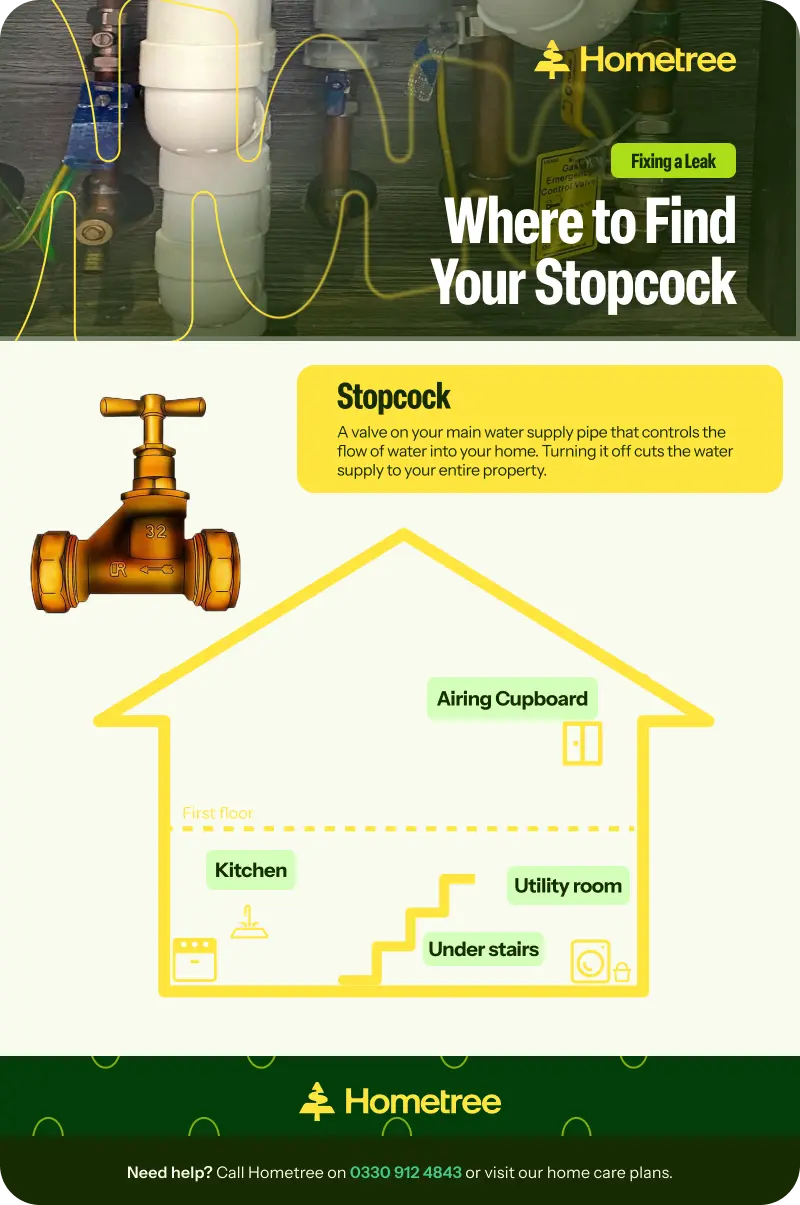
It’s worth turning both off as a precaution in case the water valve fails.
Notes: If the leak is near any electrical sockets, you should turn off that circuit in your fuse box/consumer unit.
If the leak is close to a radiator, it could be a leaking radiator valve. And if it’s near you boiler, it could be a leaking boiler.
2. Drain the taps
Turn on the taps connected to the pipe and let the water run out.
If the taps don’t appear to be draining the pipe, you will need to look for a bleed valve instead.
Whilst this is happening, dry off the pipe with a towel and cover your floor to protect it.
When the water stops flowing from the tap, you know it’s fully drained.
3. Take the strain off the pipe
Grab a cloth and tie it tightly around the pipe at the source of the leak.
This will help minimise water damage in your home whilst you wait for help.
Identify the cause of the leak
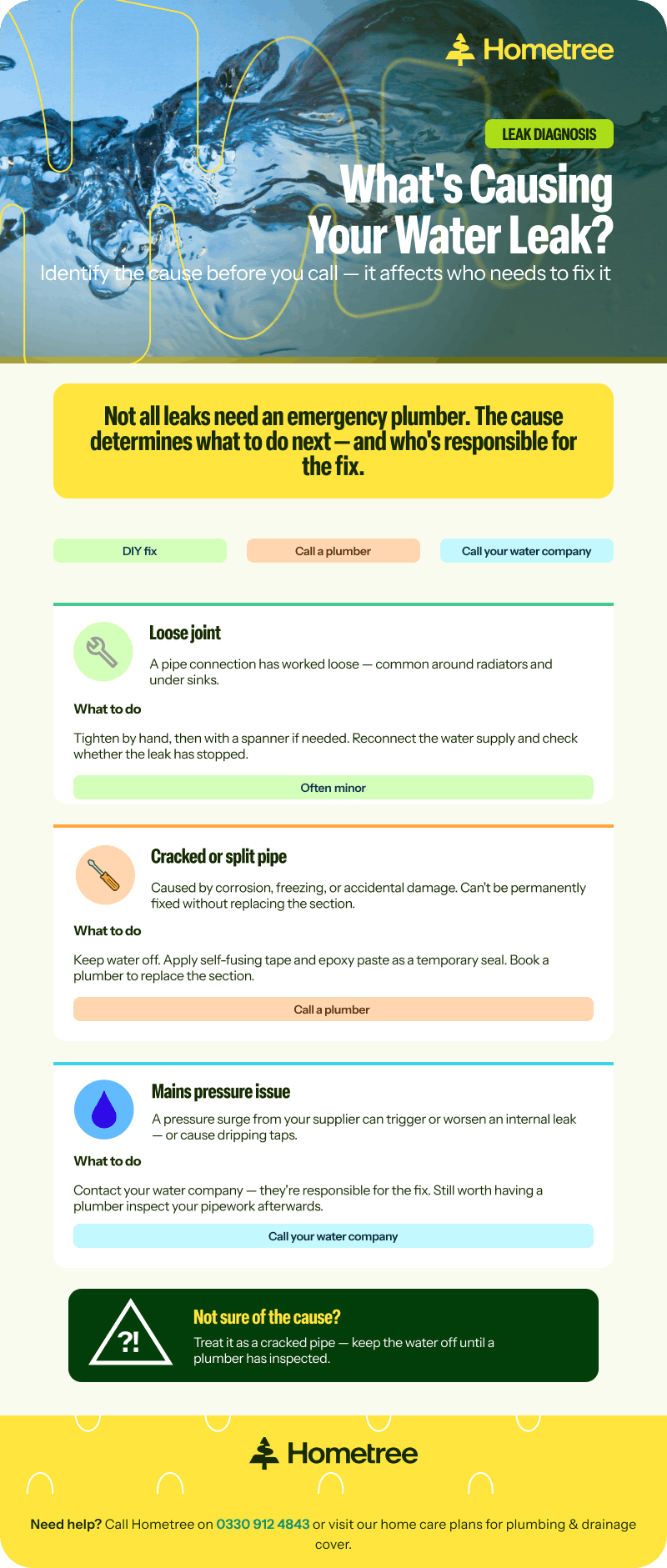
A loose joint or failing fitting
Leaks often originate at joints or from cheap compression fittings.
You can fix this by simply tightening the joint.
You can usually tighten a joint by hand, but try with a spanner if that doesn’t work.
Once you’ve tried this, reconnect the water supply and partially turn on a tap to see if the leaking has stopped.
A cracked or split pipe
Even durable copper pipes can suffer from corrosion, pressure changes, or external damage (like a DIY mishap), leading to cracks and splits.
You can only temporarily manage this until a plumber comes and fixes it.
In the meantime, keep the water sources switched off.
How to fix a leaky pipe
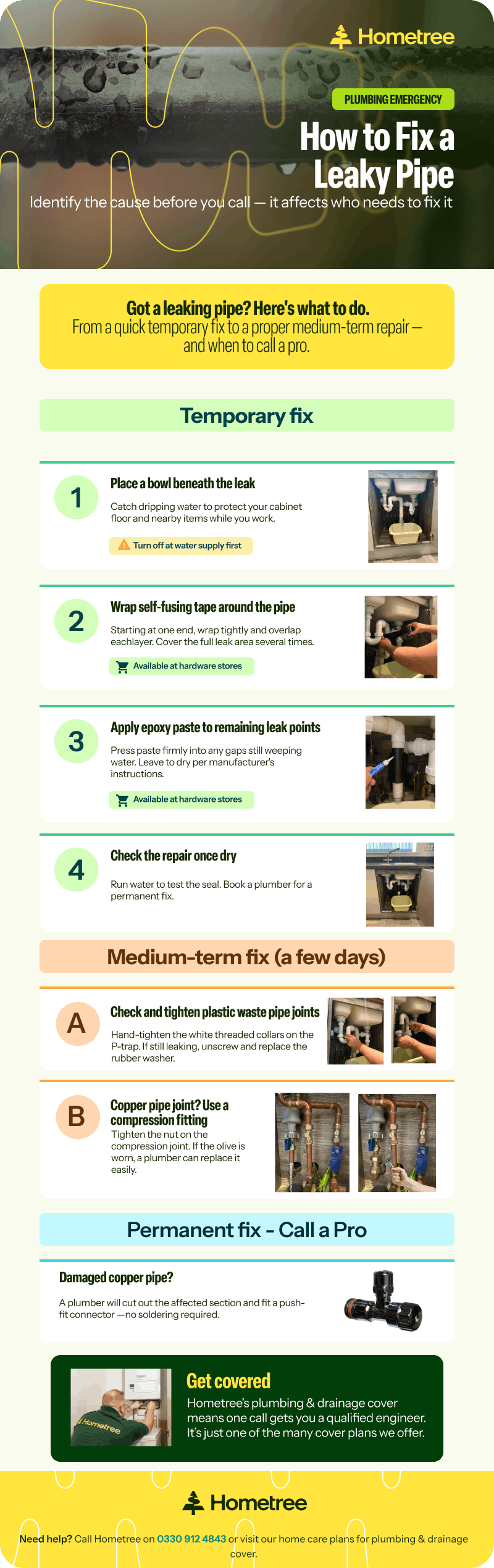
While you’re waiting for a professional plumber, there are ways to tackle copper pipe leaks without soldering.
For a temporary fix, you’ll need self-amalgamating (self-fusing) tape and epoxy paste, which are usually available at hardware stores.
Follow these steps to seal a leaking pipe:
- Wrap the self-fusing tape tightly around the pipe several times, until it’s fully sealed.
- Apply epoxy paste to any spots in the pipe that are still leaking water.
- Leave this to dry according to the manufacturer’s instructions on the packaging.
How to prevent pipe leaks
Check your water pressure
If your water pressure is too high, it puts a massive strain on your water pipes.
This seriously reduces the life expectancy of valves and joints, where leaks are most likely to occur.
Try turning the stop tap down, or you may need a plumber to install a pressure-reducing valve.
Insulate your pipes
When temperatures drop below zero, water in exposed pipes will freeze.
Freezing water expands, which causes your plumbing system to crack.
Use drain pipe lagging to insulate your plumbing system, preventing winter leaks and saving on energy costs.
Invest in smart leak detection
One of the smartest upgrades you can make is installing a smart flow-based leak detection device.
These systems can detect extremely low water flow rates caused by hidden pipe failures.
They will automatically shut the water off before a small drip turns into a catastrophic disaster.
Understand the location of your pipes
Accidentally drilling through central heating pipework will cause a massive leak.
Always buy a stud sensor before doing DIY.
It will beep when it scans over a hidden pipe or cable so you can mark the location and avoid contact.
You can’t always fix a leak yourself. If your temporary patch doesn’t hold or you need a permanent repair on a cracked copper pipe, be sure to call a local plumbing professional.
Get covered
You can’t always fix a leak yourself.
Hometree’s plumbing and drainage cover offers fixed price repairs for water leaks.
Our experts are here for you 24/7. Get in touch and we’ll arrange a visit from one of our local engineers at a time that suits you


Get a free home cover quote

We Beat or Match Any Quote
Phone us to beat or match British Gas or Homeserve quotes, Terms apply.

Serious About Service
24/7 claims support & rated Excellent on Trustpilot

Cover Match Guarantee
£50 gift card if we don’t cover something British Gas or Homeserve do, terms apply

All Gas Boilers Covered
All makes and models, regardless of age