What Is A Condensing Boiler? How It Works, Pros, Cons & Costs

The term ‘condensing’ describes how the boiler recovers heat from its own exhaust gases. This technology is used in several different types of boiler.
Since 2005, condensing technology has been mandatory for all new domestic gas boiler installations.
As a result, almost every modern gas boiler fitted in UK homes today is a condensing boiler.
Read on to learn how condensing boilers operate, how they differ from older models, their key pros and cons, and typical replacement costs.
How condensing boilers work
Traditional non-condensing boilers burn natural gas or oil to heat water for your radiators and hot water taps.
As they do this, they expel waste gases (including carbon dioxide and hot water vapour) straight out through the flue pipe into the open air. However, a lot of heat is expelled with them.
Condensing boilers work similarly, but include a larger or secondary heat exchanger (a component that transfers heat from exhaust gases to your heating water).
This heat exchanger captures heat from the waste gases before they escape through the flue. It then uses it to pre-heat the cool water returning from your radiators.
As these exhaust gases pass through the secondary heat exchanger, they cool down. When the gas temperature drops below its dew point (around 54°C), the water vapour in the exhaust condenses into liquid water.
This physical condensation process releases latent heat back into the heating system. This is where the name “condensing boiler” comes from.
The mildly acidic condensed liquid (known as condensate) drains out of the boiler through a plastic pipe into your household drainage system.
Getting the most from condensing mode
To make the most of this heat recovery process, the temperature of water sent to your radiators (your boiler’s flow temperature) should ideally be set to around 60°C.
This keeps the returning water below 55°C, ensuring the boiler stays in condensing mode and operates at peak efficiency.
By recycling heat that older boilers wasted, a condensing boiler burns less gas to achieve the same room temperature.
Modern ErP A-rated condensing boilers achieve 89% to 94% efficiency, compared to just 70% to 80% for older non-condensing units.
Condensate pipes
The condensate pipe is a thin plastic pipe (usually 21.5mm or 32mm in diameter) that runs from the base of a condensing boiler to a waste drain. It is typically white or grey.
Condensate is mildly acidic, so plastic piping prevents the chemical corrosion that would occur with copper pipes.
The most common problem with a condensing boiler during winter is a frozen condensate pipe. Below-zero temperatures can freeze the trickling water inside the pipe, which creates a blockage. Condensate then backs up inside the boiler.
An internal safety sensor should detect this backup and shut the boiler down automatically. The boiler’s display screen will display a low pressure or condensate error code.
Is a condensing boiler the same as a combi boiler?
No. “Condensing” describes how a boiler recovers waste heat, whilst “combi” describes how a boiler supplies hot water and central heating.
A combi (combination) boiler supplies hot water on demand directly from the cold mains supply. It doesn’t need a separate hot water cylinder or loft water storage tank.
A condensing boiler can be a combi boiler, a system boiler, or a regular (conventional) boiler.
All modern versions of these three boiler types use condensing technology to meet UK efficiency standards.
Most new combi boilers installed in UK homes are condensing combi boilers. Both terms apply to the same appliance simultaneously.
Condensing vs non-condensing boilers
Comparing condensing and non-condensing boilers highlights why Building Regulations phased out older non-condensing designs:
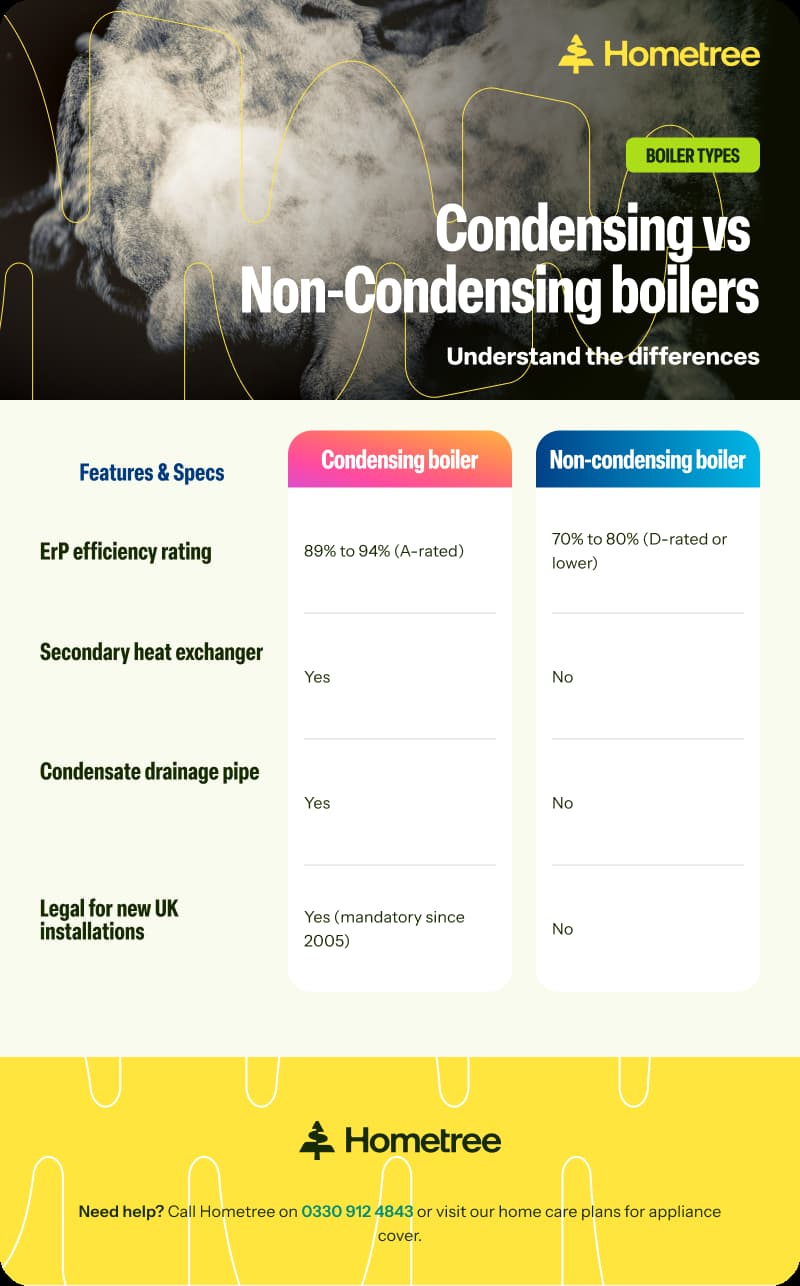
Non-condensing boilers are no longer legal for new domestic installations in the UK. However, millions of older non-condensing models remain in service across older UK properties.
Advantages of condensing boilers
Lower energy bills
Because a condensing boiler recycles heat from its flue gases, it burns less fuel to keep your home warm.
Replacing an old G-rated non-condensing boiler with a modern A-rated model can cut annual gas bills by hundreds of pounds, depending on your property size and energy usage.
Better temperature control
Modern condensing boilers feature modulating burners. These adjust their heat output automatically based on indoor demand, working seamlessly with smart thermostats and weather compensation controls.
Smaller carbon footprint
Lower fuel consumption directly reduces carbon dioxide emissions. Upgrading an inefficient non-condensing system cuts household carbon output by over a tonne of CO2 per year.
Disadvantages of condensing boilers
Drainage setup
Installing a condensing boiler requires routing a plastic pipe to an internal waste stack or external drain, which can limit boiler placement during a home renovation.
Risk of freezing
External condensate pipes can freeze during cold spells, causing temporary system lockouts until thawed.
(Slightly) higher maintenance needs
Features like secondary heat exchangers and condensate traps add extra internal parts.
Annual servicing by a certified engineer is essential to clean out debris and check that the condensate trap remains clear.
System power flush requirement
Upgrading an old non-condensing boiler often requires a power flush.
This clears sludge from old pipework, protecting delicate secondary heat exchanger surfaces from clogging.
Condensing boiler costs
A new condensing gas boiler unit typically costs between £600 and £2,500, depending on brand, heat output (kW), and type (combi, system, or regular).
Professional installation costs usually range from £1,000 to £2,500.
The exact price depends on whether you are carrying out a straightforward like-for-like replacement or converting from an older conventional system to a combi.
The total installed cost for a new condensing combi boiler typically ranges between £1,500 and £4,000.
The lower gas consumption of an A-rated condensing model allows the unit to pay back a portion of its installation cost over time through reduced energy bills.
Installing a condensing boiler
Installing a condensing boiler is a straightforward procedure for a qualified professional.
The required boiler size depends on your property size, number of radiators, and household hot water demand.
When planning an installation, consider these key factors:
1. Position and drainage access
Placing your boiler near an external wall or internal waste pipe makes installing flue terminals and condensate drainage straightforward.
2. Planning permission checks
Planning permission is not usually required for a like-for-like boiler replacement. However, check with your installer if your flue pipe location changes significantly or extends near a boundary line.
3. Gas Safe certification
You must always hire a Gas Safe registered engineer to fit or replace a gas boiler. Check their official ID card when they arrive at your property.
Hiring an uncertified installer is illegal, dangerous, and voids your manufacturer warranty.
Get your boiler covered with Hometree
Our boiler cover includes unlimited repairs, an annual boiler service, zero parts & labour charges, and 24/7 claims support to keep your home warm. Subject to exclusions and T&Cs apply.
With no hidden fees and coverage across England, Scotland, and Wales, we’ve got you covered.
You can get covered today or contact us for a free quote.


We Beat or Match Any Quote
Phone us to beat or match British Gas or Homeserve quotes, Terms apply.

Serious About Service
24/7 claims support & rated Excellent on Trustpilot

Cover Match Guarantee
£50 gift card if we don’t cover something British Gas or Homeserve do, terms apply

All Gas Boilers Covered
All makes and models, regardless of age