Types of window locks

According to the Office for National Statistics, windows are the entry point in roughly 1 in 5 successful domestic burglaries.
So, choosing the right window locks can protect your household. It can also help you satisfy insurance requirements.
The ideal window lock depends on the material and opening mechanism of your window frame.
Further reading
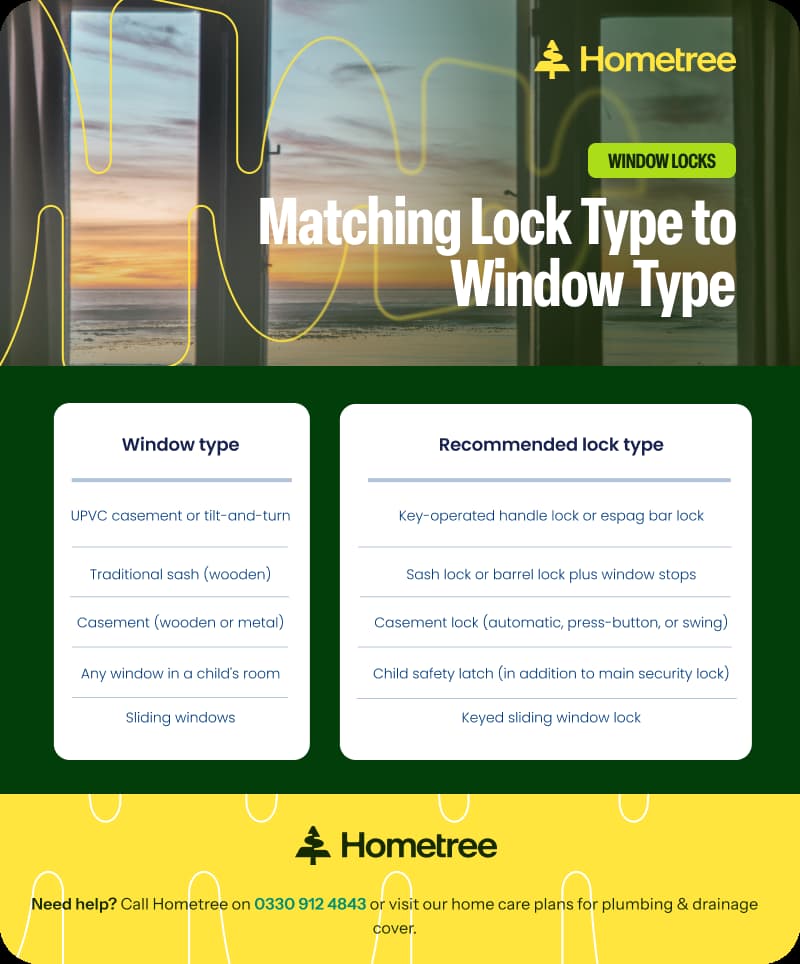
Matching lock to window type
Use this quick comparison table to identify the recommended lock mechanism for your window frame:
Keyed window locks
Keyed locks provide the most secure standard protection for most window styles.
These locks require a key to both lock and unlock the window. This stops intruders from reaching through a broken pane to open the window with a handle..
Keyed locks suit:
- Single and double-hung windows
- Sliding units
- Traditional sash frames.
Installers fit them to the inner side of the window frame, bolting the opening sash (the moving part of the window) directly to the fixed frame.
Fitting keyed locks is ideal for ground-floor and other windows that are easily accessible from outside. You should keep the keys to them hidden rather than leaving them in the lock cylinder.
UPVC window locks
Most modern UPVC windows use something called an espagnolette bar (often just called an espag bar). This is a metal bar that runs along the edge of the window and locks it in several places at once.
When you turn the window handle, the bar slides and pushes metal pegs into slots in the window frame. This locks the window shut at multiple points at the same time.
This system provides robust resistance against forced entry by distributing force across the entire frame rather than relying on a single latch.
Many UPVC window handles also feature an integrated key lock. Turning the key locks the handle mechanism in place.
To keep UPVC windows operating securely, check the espag bar is engaging smoothly.
You can also fit a sash jammer, which is a simple metal arm that pivots over the window frame. It’s an inexpensive secondary lock to reinforce UPVC windows.
Handle designs like cockspur or tilt-and-turn dictate how a window opens. But the espag bar provides the actual locking security.
Window latches
Window latches are simple catches that hold a window shut against draughts but provide minimal security. They’re common on older timber single-hung and double-hung windows.
You should only use window latches as secondary fittings alongside a key-operated lock on ground-floor or accessible windows.
On traditional sash windows, a latch alone does not satisfy security standards.
However, a properly fitted latch pulls sashes tightly together. This creates a weather seal that stops heat loss and draughts.
Child safety latches
Child safety latches restrict how far a window can open, typically limiting it to about 100mm. This gap allows some fresh air to circulate in the room whilst protecting children from opening the window.
Building regulations mandate window restrictors on upper floors in new-build homes.
However, child safety latches function purely as safety restrictors rather than anti-burglar devices. Intruders can easily bypass standard child latches.
So, you should install key-operated security locks alongside child safety restrictors.
Sash window locks
Traditional timber sash windows slide vertically within their frames.
They offer little resistance to forced entry. So, adding a sash window lock secures these traditional mechanisms.
Key-operated sash locks fit across the meeting rails where sashes overlap, bolting both sashes firmly together.
Alternatively, barrel locks fit into drilled holes in the inner sash frame. These need a key to remove the locking pin.
You can also install window stops, which are metal pegs or bolts screwed into the upper frame track. These prevent sashes from sliding open beyond a safe ventilation limit.
For maximum sash window security, fit a central sash lock alongside at least one barrel lock or window stop on each side of the frame.
Casement window locks
Casement windows hinge at the side or top and swing outwards. You can secure timber or metal casement frames using three primary lock designs.
- Automatic casement locks engage automatically when you pull the window shut. Only a key is needed to unlock them.
- Press-button locks have an integrated plunger button for locking the mechanism. A key is then used to release it.
- Swing locks are key-operated fittings mounted on the frame that pull fixed and opening casements tightly together, enhancing both physical security and draught-proofing.
For ground-floor casement windows, key-operated automatic or swing locks provide good protection.
What home insurers require
Most UK home insurance policies stipulate that all ground-floor windows and accessible upper-floor windows must have key-operated locks fitted.
Accessible windows include any window reachable from:
- Flat (as opposed to curved) roofs
- Balconies
- External drainpipes.
Insurers generally reject claims for window burglaries if accessible windows rely solely on non-keyed latches.
Many policy agreements specifically reference BS 7950, a British Standard for thief-resistant window security hardware.
Failing to maintain compliant window locks can invalidate your home insurance policy following a break-in.
If you’re unsure about your existing situation, phone your insurance provider and ask directly what lock types your specific policy requires.
If an intruder damages your window locks or mechanisms fail unexpectedly, check whether your home emergency cover handles repairs.
Hometree’s Your Home Plus plan covers emergency replacement for broken locks on external doors and windows.
Further reading
Review our overview on why you need locks and keys insurance to understand policy terms, and read our separate guide on the types of house locks for main entrance door security.
Getting locks fitted
For simple handle replacement on modern UPVC windows, competent DIYers can replace handles directly using matching spindle sizes.
However, for complex espag bar installations, sash frame drilling, or mortice fittings, hire a qualified locksmith.
Search the Master Locksmiths Association directory at locksmiths.co.uk to find vetted, insured local professionals.
Buying checklist
When choosing new window locks, run through this simple checklist before purchasing:
- Identify your frame material (UPVC, timber, or metal) to select compatible hardware.
- Confirm whether the window sits on the ground floor or near accessible structures like flat roofs.
- Ensure all ground-floor and accessible windows feature key-operated locks.
- Check whether your chosen hardware satisfies your home insurer’s policy terms.
- Fit both a key-operated sash lock and barrel stops on traditional sash windows.
- Add child safety restrictors on upper-floor bedroom windows alongside primary security locks.
Get home emergency cover with Hometree
Our home emergency cover includes unlimited repairs, an annual boiler service, zero parts & labour charges, and 24/7 claims support to keep your home warm. Subject to exclusions and T&Cs apply.
You can get covered today or contact us for a free quote.



We Beat or Match Any Quote
Phone us to beat or match British Gas or Homeserve quotes, Terms apply.

Serious About Service
24/7 claims support & rated Excellent on Trustpilot

Cover Match Guarantee
£50 gift card if we don’t cover something British Gas or Homeserve do, terms apply

All Gas Boilers Covered
All makes and models, regardless of age